Cellar waterproofing in Saginaw
Cellar waterproofing in Saginaw, Michigan, usually means an older stone, brick or early block basement under a house built before 1950, often with no working footing drain. The realistic aim is a cellar that stays dry enough to use: water collected at the footing, pumped away, and the walls left able to breathe.
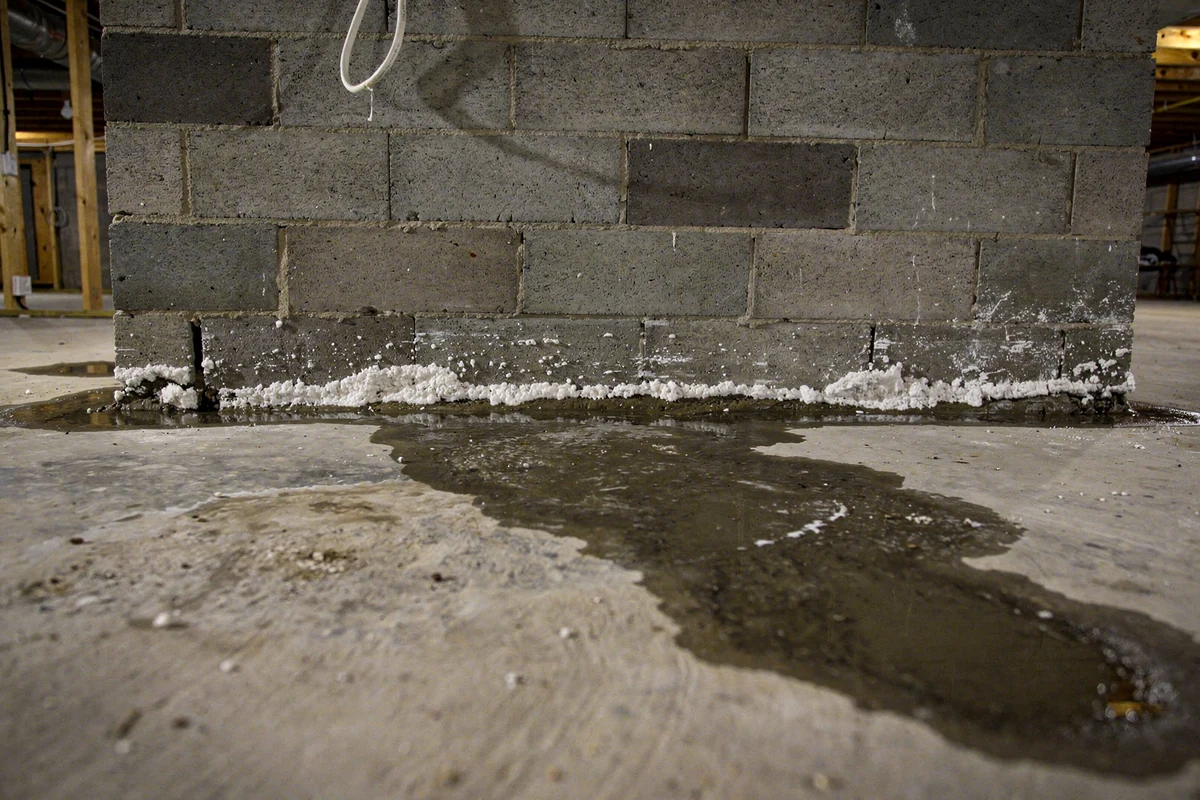
Search for basement waterproofing and most of what comes back assumes a poured concrete wall from the last fifty years. A large share of the houses in Saginaw and Bay City sit on something older. The Census counts 21,063 homes in the city of Saginaw with a median year built of 1949, and 8,347 of them, about four in ten, went up in 1939 or earlier. Bay City is older again: 7,911 of its 16,078 homes predate 1940 and the median year built is 1941. Midland, by contrast, has a median of 1971, which is why a cellar question is so much more common on the east side of the river than in the newer subdivisions out west.
What an old cellar here is made of
Under the older streets you find fieldstone laid in lime mortar, soft brick, clay tile, and the first generations of concrete block, sometimes with a poured floor added decades after the walls. Some cellars were dug to hold coal, a furnace and canning shelves and were never meant to be living space. Many had a clay tile drain laid beside the footing, and after eighty or a hundred years that tile is broken, silted or simply gone.
None of these walls was built to be watertight. Lime mortar is softer than the stone around it on purpose, so that moisture moves through the joints and the joints wear instead of the stones. A damp face on a stone wall in April is the wall doing what its builders expected.
Why they take water in spring
The lake plain soils around the river are heavy and slow to drain. The federal soil description for the Zilwaukee series, named for the village just north of the city, puts its seasonal high water table at or just below the surface from roughly October to June. A cellar floor sits several feet down into that, so for much of the year the ground outside is wetter than the cellar, and with no drain at the footing the water has nowhere to go except in. It arrives at the floor edge first, then through low mortar joints, and in the worst springs up through cracks in a thin old floor.
Downspouts are the other half of the story. Many older houses had roof water piped into the ground beside the foundation, and in the city those connections were meant to be cut out of the sewer by 2002. Where a downspout still empties next to the wall, a lot of the cellar water is roof water, and moving it away from the house is the cheapest improvement available.
What can be done from inside
Collect the water at the footing. An interior perimeter drain feeding a sump pit is the usual answer, the same idea as interior drain tile in a newer house, with one difference. Old footings are often shallow and sometimes barely more than a wider course of stone, so the trench has to be cut carefully and kept from undermining the wall. Ask anyone pricing the job how deep the footing is and how they plan to dig beside it.
Repoint, do not seal. Loose and missing mortar can be raked out and repointed with a mortar that is no harder than the original. Hard cement mortar and thick waterproof coatings on the inside face tend to trap water in the wall, and the stones or soft brick then spall and crumble instead of the joints.
Manage the air. A cellar that is dry underfoot can still be damp in the air. A drained floor, a sealed sump lid and a dehumidifier sized for the space make more difference to a musty smell than any paint.
What to be wary of
Water that comes up through the floor drain after a heavy storm is a sewer problem, not a wall problem. In the city of Saginaw the owner is responsible for the sewer connection from the main to the property line, and connections fifty years old or more are replaced rather than investigated, so on a house of this age that is worth ruling out first. The Saginaw city page sets out that rule.
Excavating the outside of a stone wall is possible but disturbs a wall that may be holding together largely by habit, and it needs a structural eye before anyone digs. A wall that is bulging, losing stones or leaning is a foundation repair question before it is a waterproofing one.
Whoever does the work needs the Michigan maintenance and alteration licence in the right craft, and checking it takes a couple of minutes. Typical cost ranges for drainage and pumps are on the cost page.
Questions people ask
- Can an old stone cellar in Saginaw be made completely dry?
- Rarely completely, and it does not need to be. The practical target is no standing water, a dry floor and dry air, which an interior footing drain, a sump and a dehumidifier usually achieve. The stone itself will still show some damp in a wet spring.
- Should I paint the inside of my stone cellar walls with waterproof coating?
- Usually not. Stone and lime mortar walls need to let moisture out. A thick coating on the inside face can trap water in the wall and speed up crumbling. Repointing with a soft mortar and draining the floor edge is the safer approach.
- Why does my cellar flood only in spring?
- Because the water table in the heavy lake plain soils around Saginaw is high from roughly October to June. The cellar floor sits below it for much of that time, and with no working drain at the footing, the water comes in at the floor edge.
- Is water coming up my floor drain a cellar waterproofing job?
- Usually not. Water rising through a floor drain after a storm points to the sewer lateral or the city sewer. In Saginaw the owner is responsible for the connection to the property line, so rule that out before paying for wall work.
Where these numbers come from
- Year built and median year built, Saginaw city, Bay City and Midland (B25034, B25035) (U.S. Census Bureau, ACS 2020 to 2024 5 year, checked 16 November 2026)
- Zilwaukee series seasonal water table (USDA NRCS Official Series Description, checked 16 November 2026)
- Roof and stormwater connections and the 2002 residential deadline, section 51.027 (American Legal Publishing, City of Saginaw Code, checked 16 November 2026)
- Sewer connection investigation and the fifty year rule, section 51.007 (American Legal Publishing, City of Saginaw Code, checked 16 November 2026)
Last checked 16 November 2026.